Archives - Page 2
-

The Economy, work place and COVID-19
Vol. 1 No. 5 (2021)The coronavirus crisis constitutes a challenge for the worlds' economy and the livelihoods of citizens. During this health crisis, it is vital that we not only protect the critical sectors of our economy, but also our assets, technology, and infrastructure, and more importantly, we need to protect jobs and workers. This issue covers a wide range of discussions on the current situation in workplaces and the economy at large
-

Impact of Infrastructure Development on Societal Advancement in the Democratic Republic of Congo: Challenges and Opportunities
Vol. 4 No. 3 (2024)The Democratic Republic of Congo (DRC) is a country rich in natural resources but often hindered by political instability, economic challenges, and underdeveloped infrastructure. This research issue focuses on how infrastructure development—encompassing transportation, energy, communication, and public services—affects societal advancement in the DRC. The study will explore the challenges and opportunities associated with infrastructure projects, particularly in rural and underserved areas.
Key questions include: How does the current state of infrastructure impact social outcomes such as education, healthcare, and economic opportunities? What are the barriers to infrastructure development, including governance, funding, and security concerns? How can sustainable and inclusive infrastructure projects drive societal development and reduce regional inequalities?
This research aims to provide a comprehensive analysis of the interplay between infrastructure and societal development in the DRC, offering policy recommendations to enhance the effectiveness of infrastructure projects in promoting long-term social and economic growth. The findings will contribute to the broader discourse on development strategies in post-conflict and resource-rich countries, with a focus on achieving sustainable development goals.
-
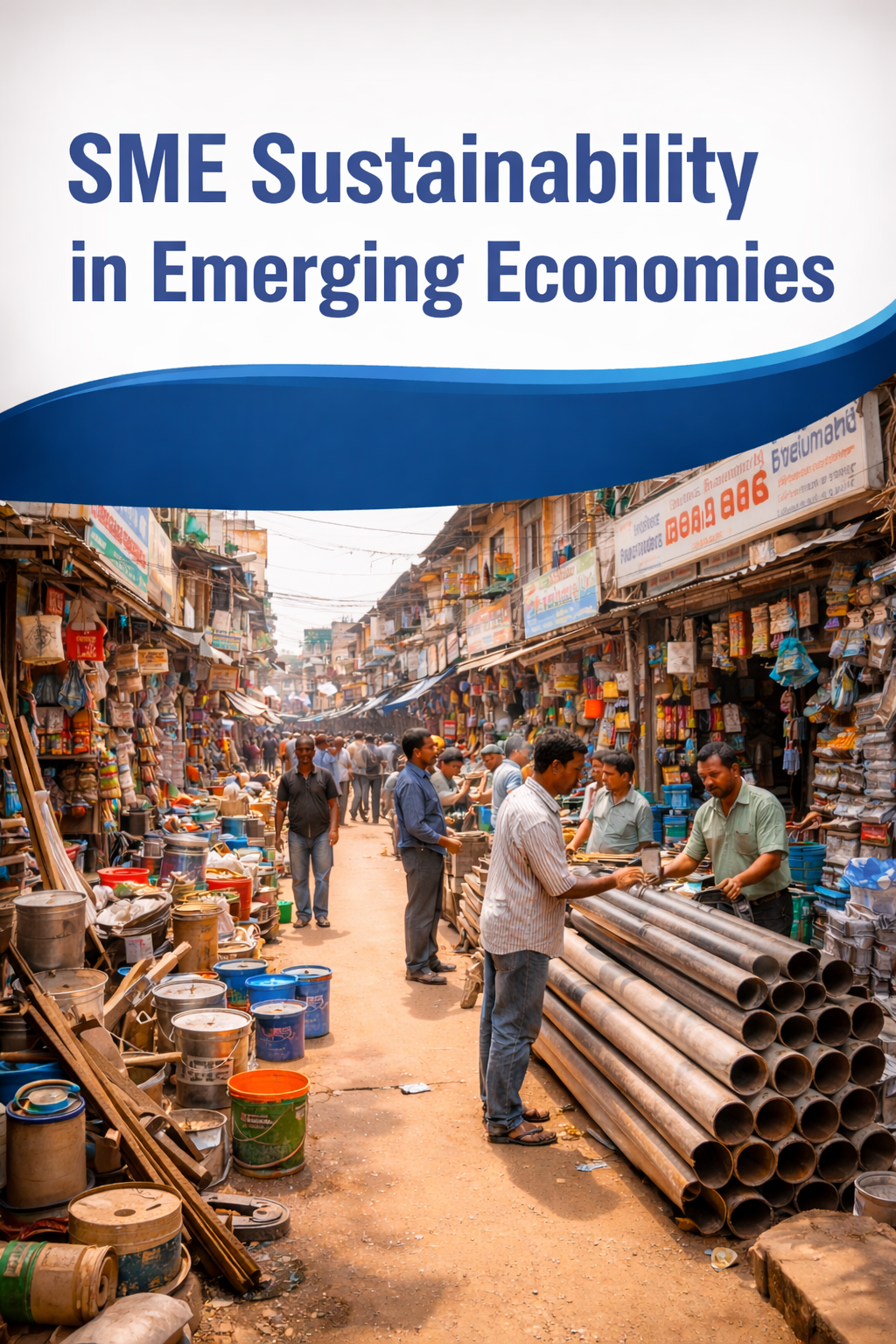
SME Sustainability in Emerging Economies
Vol. 6 No. 2 (2026)SMEs as Engines of Economic Resilience in Africa
Small and Medium Enterprises (SMEs) continue to serve as the backbone of economic activity across Africa. This special issue brings together empirical and conceptual studies focusing on SME sustainability in Lubumbashi, particularly within the hardware sector. The contributions highlight the interplay between financial practices, cultural dynamics, policy frameworks, and entrepreneurial strategies. Collectively, these articles provide valuable insights for academics, policymakers, and business practitioners seeking to enhance SME resilience in emerging economies.
-

Conference Proceedings 25th March 2023
Vol. 3 No. 2 (2023)The Intersection of Technology and Society is currently accepting submissions for its upcoming issue focused on the Future of Learning, Work, and Growth. We invite researchers, scholars, and industry professionals to submit original research, theoretical and conceptual papers, case studies, and best practices in the following areas:
Data Science and Analytics: how data science and analytics are changing the way we learn, work, and grow.
Artificial Intelligence and Machine Learning: the impact of AI and ML on education, workforce development, and organizational growth.
Education Technology: innovative uses of technology in the classroom, the impact of e-learning, and the future of education.
Workforce Development and the Future of Work: strategies for preparing workers for the jobs of the future, reskilling and upskilling programs, and the role of technology in workforce development.
Organizational Growth and Innovation: how organizations can create a culture of innovation, strategies for driving growth, and the impact of technology on organizational structure and strategy.
We welcome papers that take an interdisciplinary approach and examine the intersection of technology and society in these areas. Submissions should be original work that has not been previously published or is under review elsewhere. All submissions will be subjected to a rigorous peer-review process. -
Law, health, technology and culture
Vol. 2 No. 2 (2022)The regulation of the body provides an important concern in law, medical practice, and culture. This issue contributes to existing research in the area by encouraging experts from a range of related disciplines to consider the legal, cultural, and medical ways in which we regulate the body, further exploring how conceptions of self, liberalism, property, and harm inform and influence contentious legal and ethical questions about what we can and cannot do to or with our own bodies.
-

Public Health and Environmental Management
Vol. 4 No. 5 (2025)Featured Articles
-
Les facteurs écologiques associés à l’endémicité du paludisme dans la commune de Wembo-Nyama à Lumumbaville
Exploring the ecological determinants of malaria endemicity in rural communities. -
Opinions de la communauté sur l’évacuation et la gestion des déchets ménagers: Cas du quartier Kingasani dans la ville de Kinshasa
An analysis of community perspectives on waste management in urban areas. -
Évaluation de la qualité de l’eau, de l’hygiène et de l’assainissement dans les écoles élémentaires publiques dans le 7ème Arrondissement de la ville de Ndjamena au Tchad
Assessing the status of water, hygiene, and sanitation in public elementary schools.
Editor’s Note
This issue highlights critical research on public health, environmental management, and governance practices across Africa. The articles underscore the pressing need for collaborative and sustainable solutions to enhance living conditions and governance structures on the continent. -
Previous
26-31 of 31